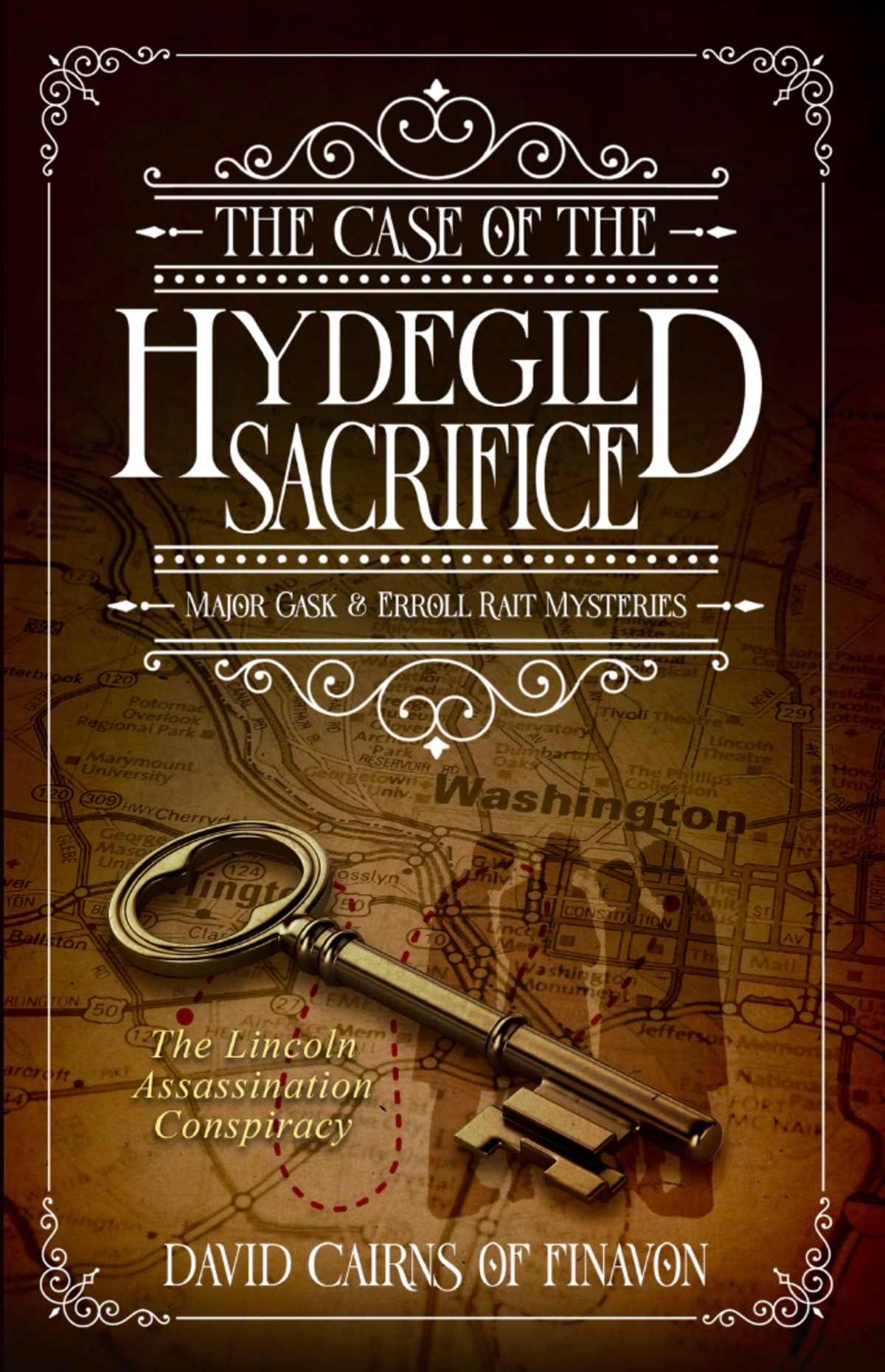
Historical fiction often begins at a desk, but for me it truly comes alive on foot. My latest novel, The Case of the Hydegild Sacrifice, set in 1865, follows Major Gask and his companion Erroll Rait from the Scottish Highlands to the heart of Washington, D.C., tracing a route shaped by one of the most consequential moments of the nineteenth century: the assassination of Abraham Lincoln.
I write in the Victorian period because it remains physically present. Streets, churches, theatres, and houses from the era still stand. You can walk where history unfolded, lean against the same stone, and—if you pay attention—feel the moral unease that often lingers long after events have been sanitised by time.
Edinburgh: Violence on the Royal Mile
The journey begins in Edinburgh, a city that rewards slow exploration. Amid its many landmarks, St Giles’ Cathedral—the High Kirk of Edinburgh—dominates the Royal Mile. Founded in 1120, it stands at the spiritual and political centre of the city.
In my novel, St Giles becomes the scene of sudden violence as Gask and Rait confront an assassin seeking revenge for earlier events. The action spills from the Royal Mile into the cathedral’s cavernous nave, gunshots echoing against stone that has absorbed centuries of turmoil. Although details have changed since 1865—a clock once described in the book has long been removed—the building remains instantly recognisable. Visitors today can still stand beneath its crown spire and imagine the shock of violence intruding upon sacred space.
From Edinburgh, the trail jumps continents, carried by steamship and rail to a nation emerging from civil war.
Washington, D.C.: A Capital on Edge
In Washington, D.C., Gask and Rait move cautiously through a city crowded with soldiers, politicians, spies, and opportunists. One of their daily meeting points is Lafayette Square, just north of the White House, beside the equestrian statue of Andrew Jackson.
Snow covers the statue of Andrew Jackson in Lafayette Square in front of the White House in Washington, D.C., on Feb. 16, 2015. (AFP Photo by Mladen Antonov/AFP via Getty Images
The statue—heroic, defiant, and technically daring—depicts Jackson reining in a rearing horse, an engineering feat when it was unveiled. The inscription on its base reads, “Our Federal Union—It Must Be Preserved,” words that carried enormous resonance in Lincoln’s fractured America. The square itself looked different in 1865: fewer monuments, altered paths, and benches long since replaced. Yet the essential geometry remains, making it easy to imagine discreet meetings and hurried conversations beneath bare winter trees.
Not far away lies one of the most disturbing—and least respected—sites connected to Lincoln’s assassination: Mary Surratt’s boarding house, now at 604 H Street NW. This was where John Wilkes Booth and his co-conspirators gathered. Surratt would later be hanged, though her guilt remains contested.
Today the building sits in the heart of Chinatown. Altered but recognisable, it has served as a Prohibition-era speakeasy and is now a restaurant, its upper rooms converted into karaoke lounges. The contrast between its present use and its grim past is startling. Few diners realise they are sitting where one of history’s most infamous conspiracies took shape.
Another easily overlooked location is the former Herndon House, once a bustling hotel and restaurant at the corner of 9th and F Streets. Boarding houses like this were central to nineteenth-century Washington life, hosting soldiers, senators, and travellers. In the novel, crucial conversations are overheard here on the eve of the assassination. Though scarcely marked today, it was a pivotal node in the conspiracy’s geography.
Ford’s Theatre: History Preserved
The journey inevitably ends at Ford’s Theatre. Unlike many sites associated with the assassination, it has been carefully preserved. The theatre remains much as it was on the night of 14 April 1865. The President’s Box—draped with an American flag and a portrait of George Washington, just as it was then—is closed to the public to prevent damage, but its presence dominates the space.
Standing in the auditorium, it is impossible not to feel how abruptly history turned there. The violence was swift; the consequences were long and deeply flawed. The executions that followed, including that of Mary Surratt, raise troubling questions about justice, guilt, and punishment—questions that underpin the novel’s title, drawn from the ancient concept of the hydegild, the innocent punished in another’s stead.
Walking the Past
What makes this journey compelling is not only the drama of the events but the fact that so much of it can still be walked today. From the Royal Mile to Lafayette Square, from quiet boarding houses to a preserved theatre, these places remind us that history does not vanish—it adapts, repurposes itself, and waits to be noticed.
For travellers with an interest in the past, following these routes offers more than sightseeing. It is an encounter with the uneasy afterlife of history—and with the uncomfortable truth that justice, then as now, is rarely as clear-cut as we would like to believe.